What Is Fair Market Value?
Kansas law requires that most property be valued at its fair market value for property tax purposes. Fair market value is defined as:
“The amount in terms of money that a well-informed buyer is justified in paying and a well-informed seller is justified in accepting for property in an open and competitive market, assuming that the parties are acting without undue compulsion.”
In other words, fair market value reflects what your property would actually sell for between a willing buyer and a willing seller, with neither party under pressure to act.
The Three Approaches to Value
Kansas county appraisers use three recognized approaches to estimate fair market value. These are the same approaches used in professional real estate appraisal nationwide:
- Sales Comparison Approach — The appraiser compares recent sales of similar properties in the market area and adjusts for differences in characteristics such as location, age, size, quality, condition, etc.
- Cost Approach — Estimates what it would cost to replace the improvements (buildings) on the land, less depreciation, plus the land value. Most useful for newer or unique properties with few comparable sales.
- Income Approach — Used primarily for income-producing property (apartments, offices, retail, hotel/motel, etc.). The appraiser converts the expected rental income stream into an estimate of value using capitalization rates derived from market data.
Uniform and Equal Valuation
Kansas law and the Kansas Constitution require that all property be uniformly and equally valued. This means:
- Similar properties in similar market conditions must be valued at similar levels.
- No individual property should be selectively over or under-valued relative to comparable properties.
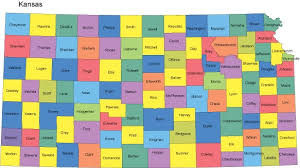
- The standard applies across all 105 Kansas counties, not just within a single county.
Statewide Oversight and Equalization
The Kansas Property Valuation Division (PVD), part of the Kansas Department of Revenue, oversees the appraisal process statewide. County commissioners, however, are responsible for hiring, supervising, and setting the budgets of their county appraisers. The PVD:
- Conducts annual ratio studies to measure how close each county’s assessed values are to actual market values.
- Issues directives and guidelines to county appraisers to ensure uniform valuation across the state.
- Sets appraisal standards and provides training and certification for county appraisers.
- Has the authority to order reappraisals if a county’s valuations are found to be significantly inequitable.